
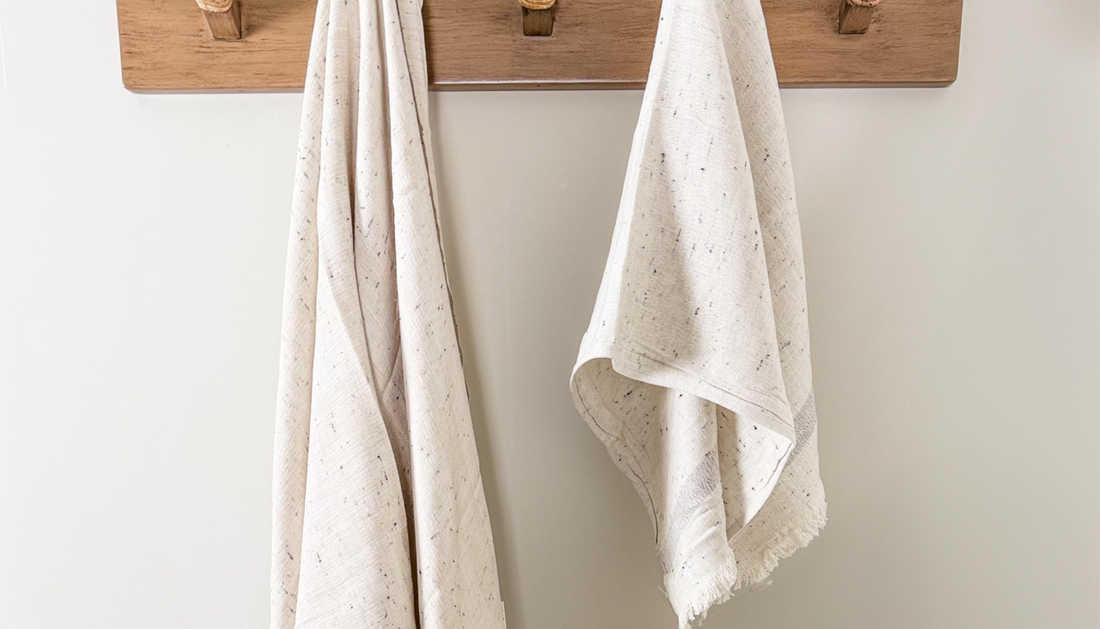
The right fabric is often the difference between a piece you live in and a piece that stays on a chair. Muslin and linen are two common options in clothing and home textiles, and they feel different in the hand. One is a weave. The other is a fiber. Neither has a single origin story, and neither automatically shares the same process or properties across every product.
Whether you are choosing a shirt, a robe, a blanket, or a table layer, it helps to know what you are touching. Then read the composition on the specific item.
What Is Muslin?
Muslin is a fabric, not a cotton variety. It is a plain, loosely woven cloth, often made from cotton, though the fiber can vary. Its construction is one reason muslin often has a light, airy feel. People reach for it in warm-weather clothing, light home textiles, and easy layers.
It is not automatically Turkish cotton. If a Kotton Bar muslin piece is cotton, or a blend, or something else, that information belongs on the product page.
What people usually like about muslin:
- A light weight that works for warm weather and layering
- A soft, slightly matte hand
- A relaxed drape that can feel even softer after washing
- Everyday uses such as shirts, robes, and light blankets
What Is Linen?
Linen is a fabric made from flax. It has been used for a long time because of its strength and its crisp, textured feel. You will see it in clothing, table linens, and bedding. How a linen piece was grown, spun, or finished still depends on that product. Do not assume every linen item shares one origin or one process.
What people usually like about linen:
- A cooler, drier feel in warm weather, especially in a looser garment
- A crisp hand that often softens with washing while keeping some structure
- A natural slub and drape that reads a little more tailored than muslin
How Do They Compare?
Muslin is often chosen when a light, relaxed feel is wanted. Linen typically has a crisper, more textured hand, though weight, weave, and finish can change how either fabric feels. Many cotton muslin pieces relax in the wash. Linen is often chosen for bedding, shirts, and rooms where you want some structure. Absorbency, wrinkling, and durability vary with weight and finish. Linen is not the same from item to item, and it is not a health product.
If you are shopping at Kotton Bar, you will find both muslin and linen in the mix, along with other textiles. The listing is the source of truth.
Which Fabric Fits the Day You Have?
- For a lightweight, airy layer: muslin is a strong direction for shirts, scarves, and summer loungewear.
- For a crisper, more textured material: linen is a strong direction for shirts, table layers, and some bedding.
- For slow mornings: a muslin or cotton robe can be the easiest thing you own, if the weight feels right.
- For the sofa or the end of the bed: see blankets and check whether the piece is muslin, another cotton weave, or something else.
Care, in Brief
Follow the care label on the item you bought. Many muslin and linen pieces do well with a gentle cycle and lower heat. Linen often looks like itself if you avoid over-drying. Muslin is usually happiest when it is not crushed in an overloaded machine. None of that is a medical instruction. It is how you keep a favorite in rotation.
Choose the texture you want to live with. Confirm the fiber. Wash it the way the label asks. That is enough to pick between muslin and linen without treating either one as a universal promise.
Browse new arrivals or best sellers if you already know the hand you want.